
CleanPlex Amplicon Sequencing Technology for Targeted DNA and RNA-Seq
CleanPlex® is a highly scalable and sensitive NGS amplicon sequencing technology. It features an advanced proprietary multiplex PCR primer design algorithm, an exceptionally uniform multiplex PCR amplification chemistry and an innovative, patented background cleaning chemistry. Together, they allow CleanPlex Ready-to-Use and Custom NGS Panels to break the limits of traditional amplicon-based and hybrid capture-based target enrichment technologies.
It is a patented 3-step, 3-hr rapid amplicon-based NGS target enrichment technology that allows researchers and assay developers to discover more with less.
Feature Highlights:
- High amplification uniformity and low PCR background noise for accurate variant calling
- Single-tube and 3-hour workflow with minimal hands-on time for easy automation
- Compatible with difficult samples (e.g. degraded FFPE DNA) and major sequencing platforms
- Extreme sensitivity (down to single cell level direct amplification)
- Excellent panel size scalability from a few to over 20,000 amplicons in a single multiplex PCR pool
- Detection of SNVs, Indels, CNVs, gene fusions, gene expression and more

View Data on CleanPlex® Technology for Amplicon Sequencing
Ultra-high Multiplexing Capability and High Performance Powered by Unique and Proprietary PCR Background Cleaning Technology
Effective removal of PCR background.
Non-specific PCR products and primer-dimers are biochemically removed using the proprietary CleanPlex digestion chemistry. This ensures that only DNA sequences of interest are converted into next generation sequencing library molecules, resulting in highly efficient use of sequencing reads.
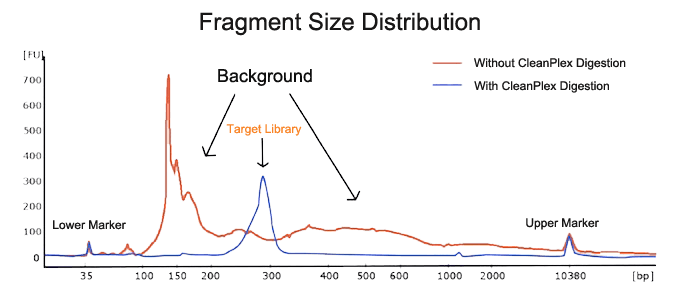
Effective removal of PCR background. Libraries were prepared using the CleanPlex OncoZoom Cancer Hotspot Panel with (blue trace) or without (red trace) using the CleanPlex digestion reagent and examined using an Agilent® Bioanalyzer®. Without CleanPlex digestion, significant PCR background was formed, which would result in low mapping rate and poor on-target rate and require more sequencing reads to obtain adequate data. With CleanPlex digestion, nearly no background was generated, producing a sharp and clean library peak in the Bioanalyzer trace. The proprietary CleanPlex digestion chemistry is essential for removing undesired side products formed during multiplex PCR amplification of target sequences.
Fast, Single-Tube Workflow
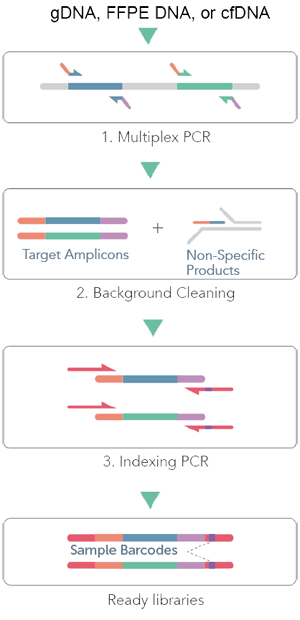
CleanPlex® NGS Panels feature a rapid, single-tube workflow* that can be completed in 3 hours and requires only 75 min of hands-on time.
CleanPlex® NGS Panels feature a rapid, single-tube workflow* that can be completed in 3 hours and requires only 75 min of hands-on time. High-quality target-enrich libraries can be easily and quickly prepared for faster time to results.
Single-tube workflow minimizes sample loss to preserve genomic information in the sample, and reduces the likelihood of errors and sample mix ups to ensure positive sample identification.
* Single-tube workflow. A single-tube workflow is followed when using a single-pool CleanPlex NGS Panel. For a multi-pool CleanPlex NGS Panel, the individual mPCR products from the primer pool-specific reactions are combined into one tube, and the remaining protocol is carried out using a single-tube workflow.
The streamlined CleanPlex workflow requires few steps and pipetting operations to convert input DNA to target enriched NGS libraries. The protocol requires no mechanical or enzymatic fragmentation, no lengthy and laborious hybridization procedure, and no expensive equipment. This means CleanPlex protocol can be easily trained and consistently performed between replicates, runs, and operators, ensuring high reproducibility and reliability in the data obtained.
CleanPlex DNA Target Enrichment and Library Preparation Workflow
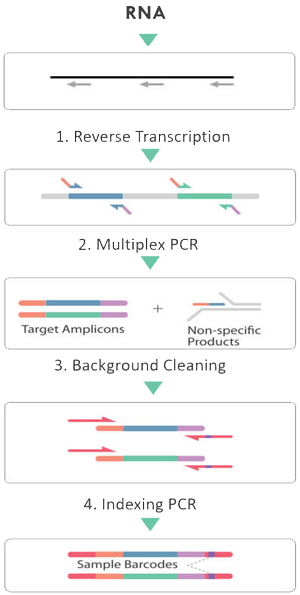
CleanPlex RNA Target Enrichment and Library Preparation Workflow
Simple Workflow Translates to High Reproducibility
High reproducibility.
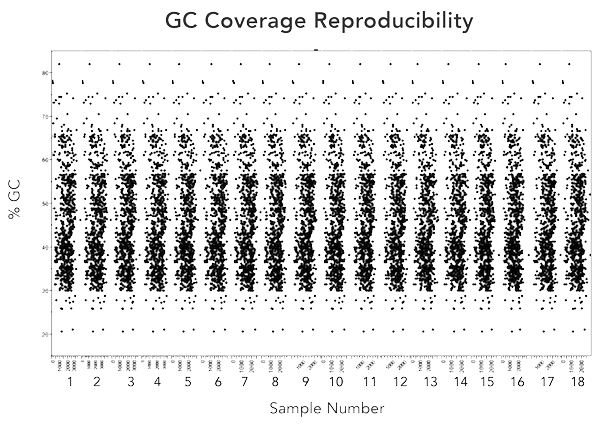
High reproducibility. Eighteen CleanPlex libraries were generated by 3 operators and sequenced on an Illumina platform. The GC coverage of the libraries were plotted and compared against each other. The libraries produced highly reproducible GC coverage profiles, yielding a Pearson correlation coefficient of 97.26% ± 1.07%.
Interrogate More Targets Without Performance Compromise
Effective background removal for all multiplexing levels.
CleanPlex® Ready-to-Use and Custom NGS Panels are designed using our proprietary ParagonDesigner™ algorithm and optimized through an iterative process by our expert scientists to ensure maximum target design rate, as well as robust coverage uniformity, high on-target rate, and low amplification bias. More than 20,000 amplicons per primer pool can be multiplexed in a single CleanPlex reaction. Amplicon size can be tuned to specification to ensures high performance with the desired sample type.
CleanPlex NGS Panels can be designed to multiplex from 7 to more than 20,000 amplicons per primer pool to interrogate hundreds of genes simultaneously. New gene targets can be easily added without sacrificing performance, allowing your assays to evolve to stay current to the latest discoveries.
Our superior primer design ensures that targets, including those in difficult regions, are successfully amplified to generate maximum coverage, minimizing assay failure due to dropouts of the desired targets.
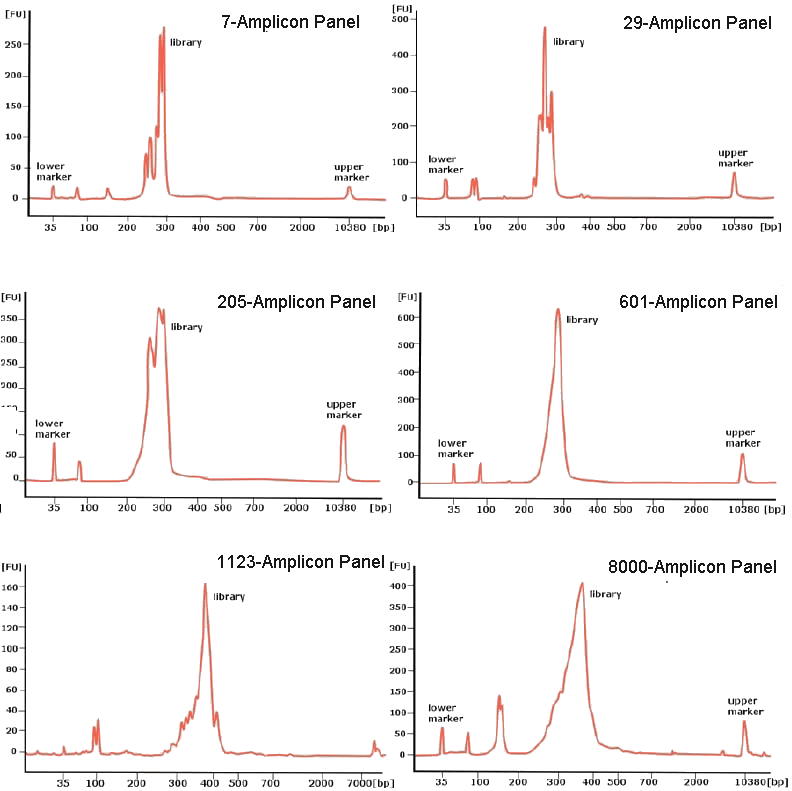
Effective background removal for all multiplexing levels. Libraries were prepared with CleanPlex NGS Panels of varying sizes (7 to 8,000 amplicons) and examined on an Agilent® Bioanalyzer®. All libraries generated a clean peak indicating minimal formation of non-specific PCR products. The data shows that CleanPlex background cleaning chemistry is effective regardless of the level of multiplexing, which means new targets can be added without affecting performance.
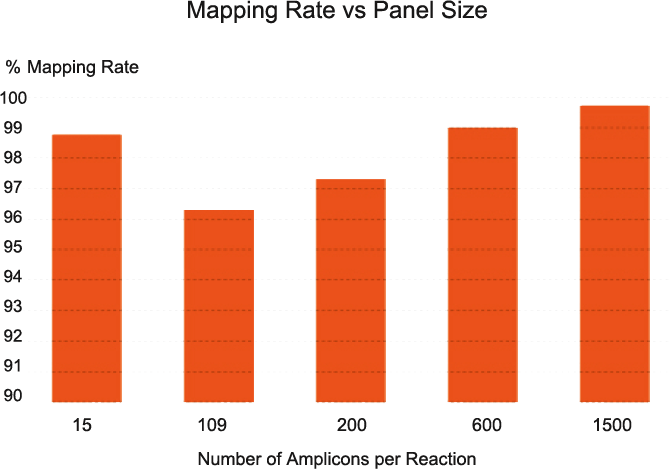
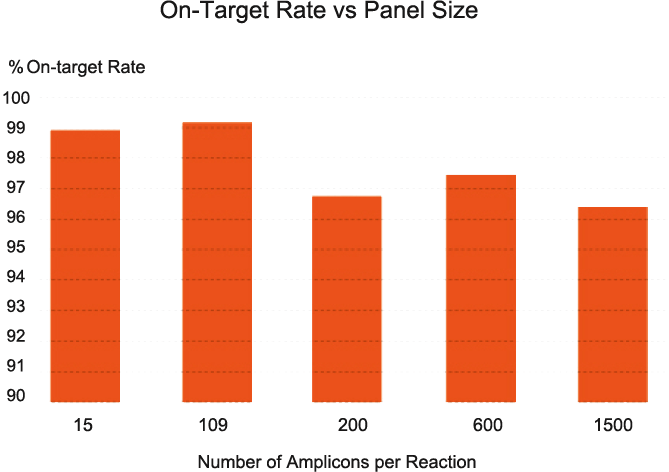
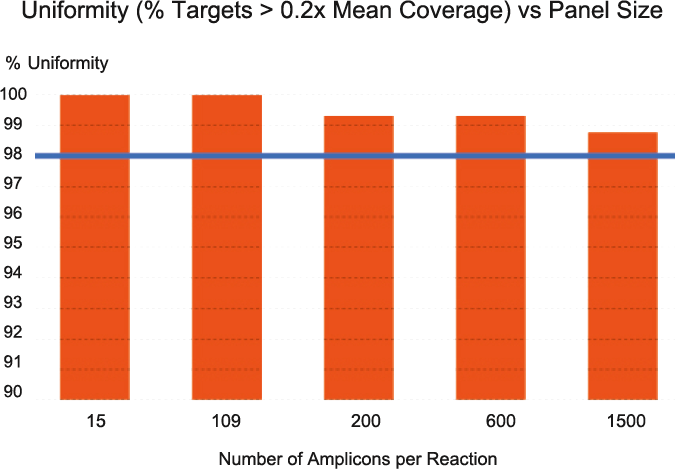
High performance regardless of panel size. Libraries were prepared with CleanPlex NGS Panels of varying sizes (15 to 1,500 amplicons) and sequenced on an Illumina® platform. Mapping rate was maintained above 96% and increased with the number of amplicons used per reaction, indicating that CleanPlex chemistry is even more effective on libraries prepared using larger numbers of amplicons. On-target rate was also higher than 96% for all panel sizes. Coverage uniformity, measured as % covered by at least 0.2X mean coverage, was maintained above 96%.
Low Input and High Sensitivity
High performance even with low input amounts.
CleanPlex®‘s streamlined workflow minimizes sample loss to preserve genomic information in low-input and challenging samples, such as degraded FFPE DNA from tumor samples, cell-free DNA from liquid biopsies and single circulating tumor cell (CTC) from blood. High quality target-enriched libraries can be generated from as little as 1 ng of DNA and even down to 6 pg of DNA from a single CTC.
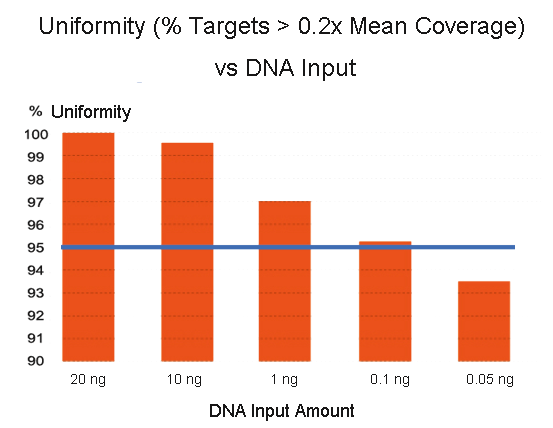
High performance even with low input amounts. Libraries were prepared with the CleanPlex OncoZoom Cancer Hotspot Panel (601 amplicons) using varying amount of input DNA and sequenced on an Illumina platform. CleanPlex technology was able to produce libraries with >95% coverage uniformity (measured as % covered by at least 0.2X mean coverage) using as little as 50 pg of input genomic DNA.
Direct Single Cell Targeted DNA Sequencing
Single cell targeted DNA sequencing with CleanPlex OncoZoom Cancer Hospot Panel.
CleanPlex NGS Panels can directly amplify single cells without pre-amplification such as whole genome amplification (WGA) while still maintaining high amplification uniformity. In addition, this avoids WGA bias and has much lower false positives and false negatives in terms of variant calls.
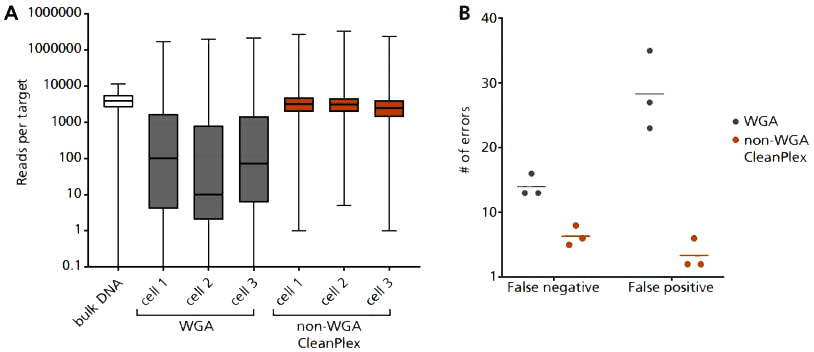
Single cell targeted DNA sequencing with CleanPlex OncoZoom Cancer Hospot Panel. Single cell lysate obtained from RareCyte’s CTC assays and input as template into Paragon’s CleanPlex OncoZoom Cancer Hotspot Panel. Using this non-WGA method vastly improves: (A) coverage uniformity, and incidence of (B) false negative and false positive errors, when compared to single cell WGA products.
Detect Variants With High Confidence (Even Without Unique Molecular Identifiers – UMIs)
High quality sequencing data with low error rate.
CleanPlex NGS Panels are powered by high-fidelity PCR enzymes and generate high-quality data with low error rates to allow confident and sensitive variant calling. CleanPlex NGS Panels can accurately detect mutations at 1% allele frequency using just 10 ng of input DNA.
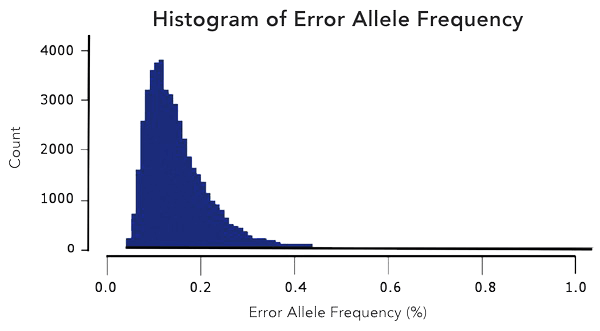
High quality sequencing data with low error rate. A library was prepared with the CleanPlex OncoZoom Cancer Hotspot Panel (610 amplicons) using 10 ng of Horizon Discovery HD780 cfDNA reference standard and sequenced on an Illumina platform to an average read depth of 8,500. A histogram of the frequency of random errors from sequencing shows that CleanPlex generated high quality data with the majority of random errors present at less than 0.2% frequency. This low level of background errors allows confident variant calling of mutations at 1% allele frequency.
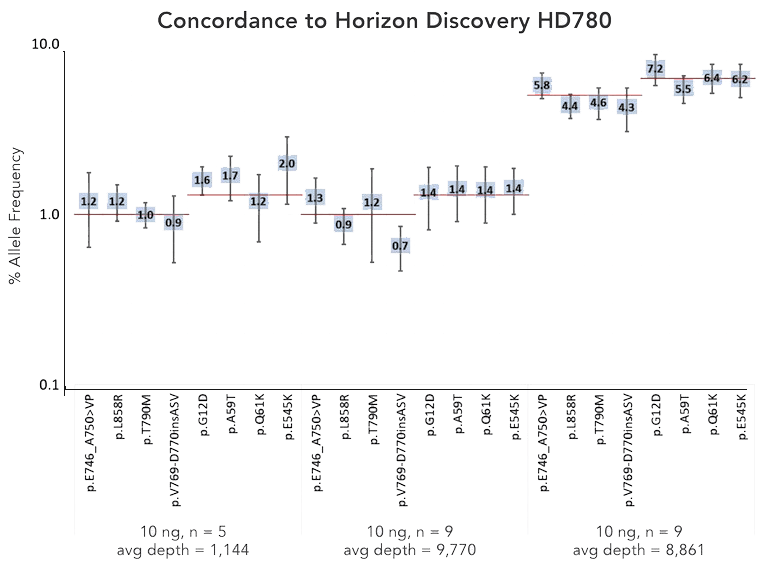
High variant call concordance. Libraries were prepared with the CleanPlex OncoZoom Cancer Hotspot Panel (610 amplicons) using 10 ng of Horizon Discovery HD780 cfDNA reference standards and sequenced on an Illumina platform to an average depths ranging from around 1,100 to 9,800 reads per amplicon. The data shows that CleanPlex consistently detected validated variants at the expected frequency. The red lines represent the known allele frequencies of the eight mutations, and numbers are the averages of the detected frequencies for each allele with standard deviation error bars.
Cost-Effective Sequencing
High performance translates to cost-effective sequencing.
The combination of low PCR background, low GC bias, and high mapping rate, on-target rate, and coverage uniformity means that very few sequencing reads are wasted on sequencing off-target sequences and non-specific PCR products and primer-dimers. It also means that fewer sequencing reads are required to ensure all targets are covered at a minimally required depth to make confident base calls. Overall, CleanPlex® NGS Panels allow efficient use of sequencing reads so that sequencing can be performed cost-effectively by allowing more samples to be sequenced at a time.
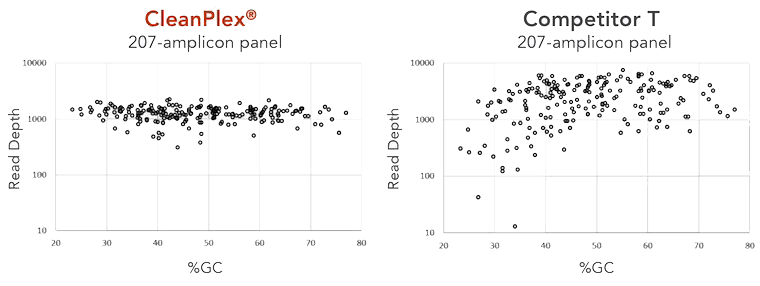
High performance translates to cost-effective sequencing. A 207-amplicon panel was used to generate target-enriched NGS libraries using either the CleanPlex or Competitor T’s library prep chemistry. Libraries were sequenced and analyzed for coverage uniformity across GC content. The results indicate that for a 207-amplicon panel, 60% less sequencing would be required using CleanPlex, which means 2.5X more samples can be sequenced on a flow cell. To achieve similar data quality, CleanPlex’s mean read depth could be reduced to 600X coverage while Competitor T’s would need to be increased to >1,500X coverage.
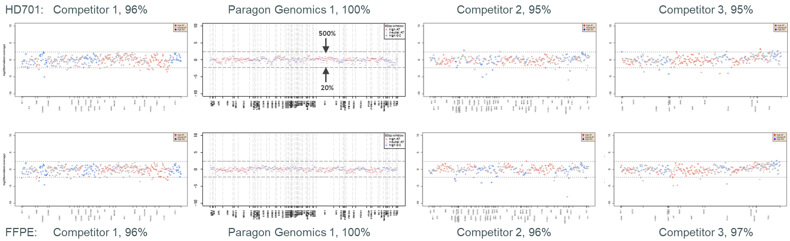
Sophia Genetics has compared CleanPlex technology with three other major amplicon-based technologies and published the results at the AMP (Association for Molecular Pathology) 2018 Annual Meeting. The following amplification plots show that CleanPlex has the best amplification uniformity (all amplicons’ read depths fall within 20% an 500% of mean depth while other technologies cannot achieve this). Besides amplification uniformity, Sophia Genetics also concluded that CleanPlex has high library conversion rate and reproducibility even on bad quality FFPE samples.
Sequencing Platform Compatibility
While most amplicon sequencing technologies are compatible with only a single type of sequencer, CleanPlex® chemistry has been specifically designed to be adaptable with both Illumina and Ion Torrent platforms using the same primer pool, without the need to inventory multiple versions of the same panel.
Benefits of Sequencing Compatibility
- Easy to set up new assays with sequencers that are already established in a lab: avoid the need to purchase new equipment.
- Cost savings depending on which sequencer would be the most cost-efficient based on applications, sample volume, throughput, etc.
- Reduced inventory cost of reagents, one panel for different sequencing platforms.
- Supply chain doesn’t depend on just one sequencing provider.
- Avoiding platform-specific biases in read distributions by application need
Comparing Illumina vs. Ion Torrent


| Illumina | Ion Torrent | |
|---|---|---|
| Advantages | Large range of sequence capacities for targeted and WGS Higher accuracy Lowest cost per Gb | Low instrumental and operation cost (especially startup) Real-time sequencing, no need for optical equipment Short run time Ideal for smaller targeting applications. |
| Disadvantages | Limit to short read lengths Cost of sequencers Index hopping Requirement of balanced Indexes | Higher error rates (false positive) Intermediate cost per Gb data Emulsion PCR & equipment necessary for pre-sequencing. |
Order a Free Trial Kit to Test
Frequently Asked Questions
-
Amplicon sequencing is a powerful molecular biology technique that involves the amplification and sequencing of a specific DNA fragment or region of interest. It has a wide range of applications in various fields, including genomics, microbiology, ecology, and more. Common applications include rare variant detection- relevant in the field of oncology with ctDNA or cfDNA - which may be missed in whole-genome sequencing due to their low abundance.
-
CleanPlex® technology is a novel amplicon-based NGS target enrichment technology developed by Paragon Genomics. The technology inherits major advantages associated with traditional multiplex PCR methods while overcoming their key shortcomings such as PCR background noise, scalability (panel size), uniformity, and limitations from GC bias.
-
CleanPlex NGS Amplicon Sequencing enables researchers to conduct targeted sequencing, making it possible to identify and characterize specific genetic variants and mutations with high resolution. Specifically, researchers can identify a variety of genetic alterations with high levels of precision and accuracy that help track disease progression, identify potential therapeutic targets, and understand the genetic underpinnings of diseases.
Additionally, with CleanPlex NGS amplicon sequencing, researchers have an important tool for advancing our understanding of various diseases and conditions that is cost-effective and efficient. Researchers can process a large number of samples in a single run, making it an ideal choice for projects involving extensive sample sizes or high-throughput screening. This scalability helps save on costs while accelerating progress.
CleanPlex NGS Amplicon Sequencing empowers researchers to efficiently identify and explore diseases and genetics, and advance our understanding of medical conditions.